Vagal Toning
-
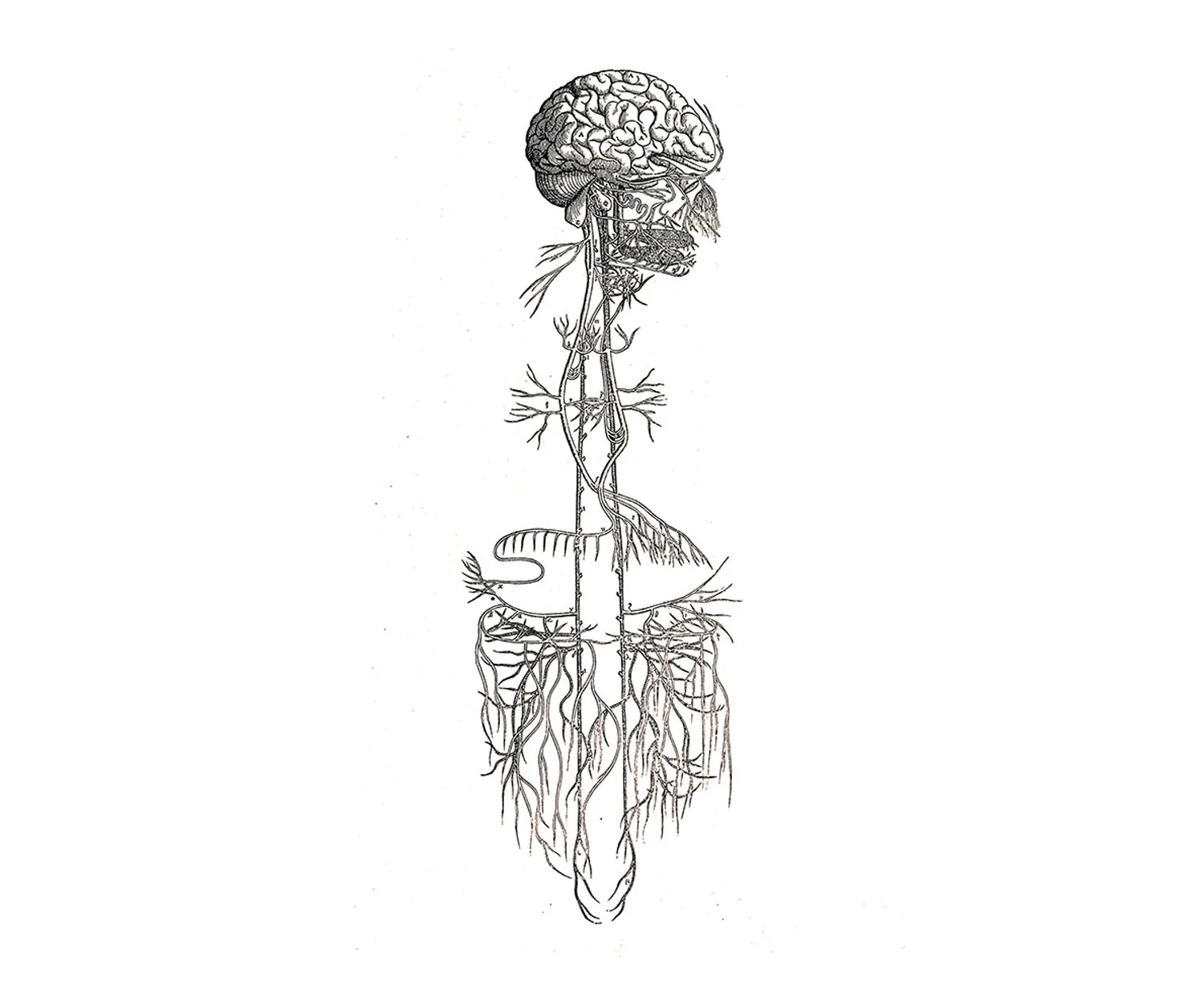
Vagal toning refers to the practice of strengthening and regulating the vagus nerve — the longest nerve in the autonomic nervous system, running from the brainstem down through the heart, lungs and digestive tract.
A well-toned vagus nerve means your body can efficiently switch between states of stress and rest — activating when needed and, crucially, recovering quickly. It is directly linked to heart rate variability, digestion, immune response and emotional regulation.
You tone the vagus nerve through practices that stimulate it directly through a set of somatic exercises, powered by breathing practices.
High vagal tone is associated with greater resilience to stress, better mood, reduced inflammation and a calmer, more grounded nervous system.
Low vagal tone is linked to anxiety, depression, chronic stress and poor physical health.
In short: tone the vagus nerve, and you improve your capacity to handle life.
-
Vagal toning is for anyone living a modern life under sustained pressure. It has proven to be particularly helpful for people who:
Experience chronic stress, anxiety or burnout
Struggle with sleep — falling asleep, staying asleep, or waking unrefreshed
Have digestive issues such as IBS, bloating or sluggish digestion
Deal with depression or low mood
Feel stuck in fight-or-flight — reactive, on edge, unable to wind down
Are recovering from trauma, where the nervous system has become dysregulated over time
Suffer from chronic inflammation or autoimmune conditions
Feel emotionally exhausted or disconnected
The vagus nerve does not discriminate by age, fitness level or background — it simply responds to the right stimulation.
It is also worth noting that you do not need to be unwell to benefit. Athletes use vagal toning to improve recovery. High-performers use it to sharpen focus and emotional regulation.
-
Physical benefits:
Lower resting heart rate and improved heart rate variability
Better digestion and gut function
Reduced inflammation throughout the body
Stronger immune response
Improved sleep quality
Mental & emotional benefits:
Greater resilience to stress
Reduced anxiety and depression
Faster recovery from emotional upset
Improved focus and mental clarity
Greater sense of calm
Social benefits:
Better emotional regulation in relationships
Increased empathy and social connection
Improved ability to read social cues — the vagus nerve plays a direct role in facial expression and tone of voice
The vagus nerve responds to consistency. Short, regular practices done daily have a cumulative effect over time. It is less about intensity and more about frequency.
-
Your Vagal Toning journey starts with 2 individual sessions* during which we will do the groundwork and set you up for further steps.
Session 1: intro & context setting, analysing your context and experience, crash course into how the nervous system works and how we can work with it.
Session 2: mapping your nervous system, analysing the glimmers and triggers, goal setting and further plan.
After the 2 intro sessions you are welcome to continue individual sessions and switch to a group setting.
*upfront commitment and investment in 2 individual sessions is required, 3rd and any subsequent sessions upon request.
-
After 2 initial individual into sessions you can join a group session, during which we will move through a set of somatic practices, breathing exercises and gentle movement, carefully chosen to stimulate the vagus nerve. You will also learn quick fix tools that you can practice on your own daily.
If you prefer to continue on a individual basis, a more personalized approach can be tailored to address any particular needs.
-
Absolutely NOT
Vagal toning is a powerful tool for nervous system regulation, but it is not a substitute for psychotherapy, nor trauma therapy. They work on different levels and, at their best, complement each other rather than compete.
Psychotherapy works with the content of the mind — the stories, beliefs, patterns and experiences that shape how we think, feel and behave.
Vagal toning works with the physiology underneath — the nervous system state that those thoughts and feelings arise from.
What research does suggest is that a dysregulated nervous system can make psychotherapy harder. When someone is stuck in chronic fight-or-flight or shutdown, the brain is less available for the kind of reflective, relational work that therapy requires. Vagal toning can help create the conditions — a calmer, more regulated baseline — in which therapeutic work becomes more accessible and effective.
Many somatic therapists, trauma specialists and psychologists now actively incorporate vagal toning practices into their work precisely for this reason. It is also a cornerstone of approaches like Somatic Experiencing and parts of EMDR.
If you are dealing with significant mental health challenges, trauma or clinical anxiety and depression, vagal toning can be a valuable part of your toolkit — but it is a complement to other psychotherapy methods, not a replacement for it.
Please, always consult your therapist / family doctor or other specialist that has been treating you.