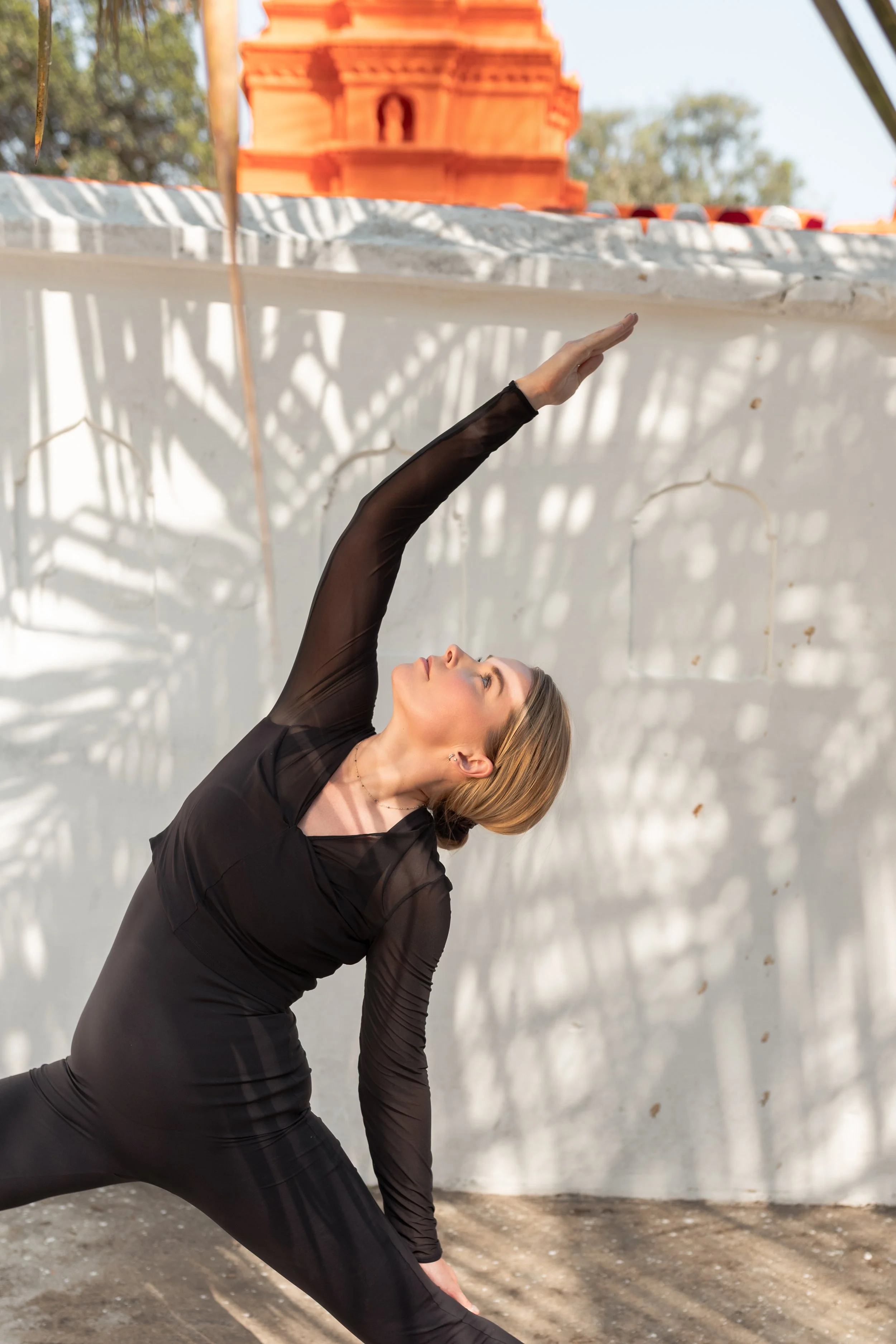
Yin Yoga
Yin Yoga is a slow, floor-based practice in which postures are held for anywhere between two and five minute — sometimes longer. There are no flows, no sequences built on muscular effort, no ujjayi breath. Instead, you settle into a shape, release muscular tension deliberately, and allow gravity and time to do the work. It is quiet, still, and often surprisingly intense.
The practice was developed in the late 1970s by martial arts teacher and Taoist scholar Paulie Zink, and later popularised and shaped into the form we know today by Paul Grilley and Sarah Powers, who brought in both anatomical understanding and mindfulness principles to create a complete system.
What it targets — and why it matters
Most forms of exercise, including active yoga styles, primarily work the muscles — elastic tissues that respond well to rhythmic, repetitive movement. Yin Yoga targets something deeper: the fascia, ligaments, tendons and joint capsules — the dense connective tissues that surround and support every structure in the body.
These tissues are largely avascular, meaning they receive very little blood flow, and they respond not to repetition but to sustained, moderate stress held over time. This is precisely what Yin Yoga provides. By holding postures passively for several minutes, we stimulate the connective tissue in a way that no other movement practice does — encouraging hydration, elasticity and healthy remodelling of the fascia.
Fascia is now understood by researchers to be one of the body's primary sensory organs — densely packed with nerve endings, involved in proprioception, pain signalling and even emotional regulation. Chronic stress, trauma, injury and prolonged sitting all cause fascia to dehydrate, thicken and restrict. Yin Yoga directly addresses this.
Some benefits of regular Yin practice include increased joint mobility and range of motion, deep release of fascial tension and chronic tightness, improved circulation to joints and connective tissue, regulation of the nervous system through sustained stillness and a natural entry point into mindfulness and meditation to name just a few.
Yin Yoga is suitable for all levels and all bodies. No flexibility or prior experience required — in fact, the less flexible you are, the more you may need it.